Nurse I’ll Be There for You SVG Design – Real Embroidery Review
First Impressions and the Mood It Creates
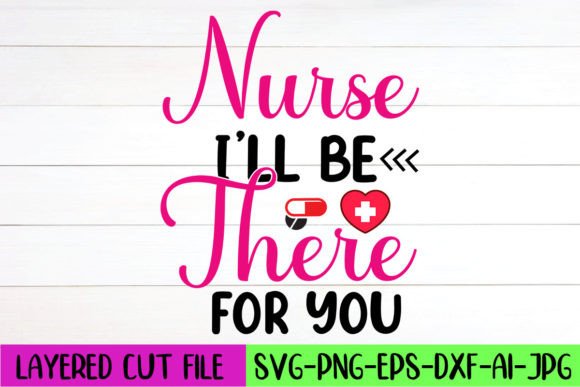
When I first opened the Nurse I’ll Be There for You SVG Design, I immediately felt a warm, heartfelt, and slightly playful energy. The composition has that “I’ve got your back” sentiment that works beautifully for nurse appreciation projects, retirement gifts, or even a morale boost for a healthcare team. The layered file structure hints that this was built with multi-material crafts in mind, and that’s a huge plus for anyone who wants to translate it into an embroidery project—whether as a direct stitch-out after digitizing or as an appliqué foundation.
From a designer’s perspective, the mood is approachable and emotional without being overly cute. The typography and supporting graphical elements feel balanced, which means the finished embroidery will likely read clearly even on slightly textured fabric. The design isn’t trying to do too much; it understands its audience. That’s exactly the kind of restraint I look for when I know a design will end up on something that gets handled, washed, and worn with pride.
Where This Design Naturally Belongs in an Embroidery Workflow
I kept picturing a custom canvas tote bag as the perfect home for this piece. Imagine a sturdy, natural cotton tote with the design stitched in a soft navy and mint thread palette—simple, clean, and instantly meaningful. But it doesn’t stop there. This design would also translate well onto a unisex sweatshirt, a zip-up hoodie, a kitchen apron, a decorative pillow cover, or even a framed hoop art piece for a nurse’s station or home office.
Because the design is supplied as a layered SVG, it’s a dream for appliqué embroidery. You can assign different fabrics to each layer, turn the typography into a smooth satin stitch, and let the background shape become a fill stitch region. For small business owners making boutique nurse gift sets, this single Nurse I’ll Be There for You SVG Design could anchor a whole collection of coordinated products.
What the Layered File Structure Means for Stitch Quality
The fact that you receive a layered SVG—along with the PNG, EPS, AI, JPJ, and DXF files—gives you total control over how you digitize for embroidery. I don’t treat this as a “ready-to-stitch” embroidery file, and I’d advise you not to either. Instead, think of it as a highly refined blueprint. The layered breakdown lets you isolate the text, the border accents, and any decorative motifs so you can assign appropriate stitch types: satin for the lettering, a tatami fill for larger background shapes, and a running stitch for fine details.
When I tweaked the design for a test digitizing scenario, I paid close attention to the small inner curves and the letter connections. At a glance, the typography looks clean enough that standard digitizing settings will keep the text legible even at smaller hoop sizes, but I’d still recommend a test stitch on a similar fabric scrap before committing to the final garment. The layered file also makes it easy to experiment with contrasting thread colors—dark outline with lighter fill, or a monochrome look that feels more modern.
A Real-Life Scenario: The Nurse Appreciation Tote
Let me walk you through a project I planned using this design. I wanted to create a set of personalized tote bags for a team of nurses graduating from a training program. The brief was simple: something heartfelt, professional enough to carry to work, and sturdy enough to survive daily use. I settled on a 12oz cotton canvas tote, a 5x7 hoop, and a color palette that matched the team’s scrub colors—teal and charcoal.
I imported the SVG into my digitizing software, separated the text layer from the decorative flourish, and set up a clean satin stitch for the lettering. The background shape I converted into a light fill stitch with a subtle texture. After one test stitch on a scrap of canvas, I adjusted the pull compensation slightly and increased the underlay for the satin lettering to prevent any gaps. The result was a crisp, highly readable design that felt like a premium retail product. The nurses loved it, and a few even asked for matching sweatshirts. That’s the kind of engagement this design can generate when it’s executed with care.
Fabric and Surface Considerations to Keep in Mind
Not every fabric will treat this design kindly. I’d avoid using the Nurse I’ll Be There for You SVG Design on extremely stretchy, thin, or loosely woven materials without proper stabilization. For apparel like t-shirts and sweatshirts, a medium-weight cutaway stabilizer is your friend, paired with a water-soluble topper if the fabric has a nap or texture. On canvas tote bags, a tear-away stabilizer works well, but I still prefer a light fusible backing to keep the stitches from sinking into the weave.
Dark fabrics present another challenge. If you’re stitching the design on black or navy garments, test your thread color contrast first. A design that looks wonderful on a white screen might lose its impact if the thread tones are too close to the fabric. I often run a quick black-and-white mockup in my embroidery software to check contrast, and I recommend doing the same. The layered file makes it easy to create a silhouette view for this very purpose.
Small Details, Big Impact in Embroidery
The joy of this design lies in its small details—the slight curve of the lettering, the tiny decorative accents, the way the elements connect. These details are what make the finished product feel handmade and intentional, not mass-produced. But they also demand careful attention during digitizing. If the design is scaled down too much, those fine lines can become muddy or break under the needle. I’d keep the smallest dimension above 3 inches for any section containing text, and if you’re going down to a 4x4 hoop, consider simplifying the layout slightly by removing the purest decorative elements while keeping the core message intact.
For appliqué, the layered file becomes a powerful tool. You can cut fabric pieces using the SVG with a Cricut or Silhouette machine, then position them on the base fabric and use the design as a placement guide for the embroidery border. That hybrid approach often yields a richer, more dimensional final product that stands out at craft fairs or in Etsy listings.
How This Design Elevates Product Value and Brand Perception
From a small business perspective, the Nurse I’ll Be There for You SVG Design carries a professionalism that lifts the perceived value of whatever you put it on. A simple tote bag becomes a thoughtful gift. A plain sweatshirt turns into a custom apparel piece that people want to photograph and share. The design is easy to recognize, emotionally resonant, and reads as well on a product listing thumbnail as it does in person.
When I’m building a product line for a craft business, I look for designs that can be recolored, resized, and adapted across multiple product types without losing their identity. This one fits that bill. The theme is specific enough to target a niche audience but broad enough to appeal to anyone who appreciates a caregiving message. That balance is valuable for Etsy sellers, boutique owners, and handmade shop operators who need consistent branding across mugs, shirts, bags, and hoop art.
Practical Embroidery Designer Notes Before You Stitch
- Always test the design on a scrap of the same fabric you’ll use for the final product. This helps you catch thread tension issues, small digitizing gaps, or color clashes before they ruin a garment.
- Review the stitch density in your digitizing software. The layered SVG gives you a clean starting point, but you control the final stitch count. Overly dense fills can cause puckering on lightweight fabrics.
- Be mindful of your hoop size. The design files are scalable, but check the minimum and maximum dimensions your embroidery machine can handle comfortably. For a 5x7 hoop, you’ll get a nice, prominent placement on the chest of a sweatshirt or the front of a tote.
- Use the right stabilizer. I’ve found that a no-show mesh cutaway works well for knits, while a fusible poly-mesh gives clean results on woven items. For tote bags, I add a layer of lightweight batting behind the embroidery area to give the stitches a slightly raised, premium look.
- Check the thread color palette in both daylight and indoor lighting. A thread that looks warm under your studio lamp might read as dull on the finished product. Snap a photo and view it on your phone screen—that’s how your customers will see it.
- Verify licensing before selling finished items. The product description includes a set of file formats (SVG, PNG, EPS, AI, JPJ, DXF) and mentions compatibility with Cricut and Silhouette, but it doesn’t spell out commercial embroidery terms. Always confirm the usage rights with the original designer if you plan to sell the finished embroidered pieces or the digital embroidery file.
When to Use Extra Caution
There are a few situations where I’d be extra careful with this design. A curved surface like a cap or a baby onesie snap area can distort the lettering unless you use a well-planned hooping technique and appropriate backing. On very small items, such as a keychain or a baby bib, you might need to simplify the design further—the layered SVG helps with that because you can easily remove the more intricate background elements and stitch only the core phrase.
Also, if you’re planning to embroider on a highly textured fabric like a waffle weave towel or a thick fleece, consider adding a water-soluble topper to keep the satin stitches from sinking. This design’s strength really shows best on smooth, medium-weight fabrics where the details can shine.
Final Thoughts on Using This Design for Real Projects
The Nurse I’ll Be There for You SVG Design isn’t just a cute graphic; it’s a thoughtful, well-structured asset that can anchor a wide range of handmade products. As an embroidery designer, I appreciate the layered file approach because it doesn’t lock me into a single vision. I can digitize it for a classic stitch-out, use it as a cutting template for an appliqué patch, and even incorporate it into a mixed-media project that combines HTV and embroidery.
For anyone building a craft business, a personalized gift line, or even just a single heartfelt project for a nurse in your life, this design delivers the emotional connection that makes embroidery feel genuinely special. Take the time to test, adjust, and match your materials to the project, and you’ll end up with a finished product that looks professional, feels personal, and gets noticed.