Nurse Sleeping Please Do Not Disturb Svg: Practical Review
As a designer who has spent years turning digital files into stitched products, I’ve learned to look at every SVG with a slightly skeptical eye. The Nurse Sleeping Please Do Not Disturb Svg caught my attention because it’s not trying to be a masterpiece – it’s simply a funny, human moment frozen in a vector graphic. The minute I unzipped the folder and saw the crisp SVG sitting next to the DXF, EPS, PDF, and PNG, I started imagining exactly how it would live on a finished handmade product. This review is my honest, stitch-by-stitch breakdown of what this design actually brings to an embroidery project, where it shines, and the little things you’ll want to keep in your back pocket before you hit “start” on your machine.
First Impressions: A Playful Design That Feels Instantly Familiar
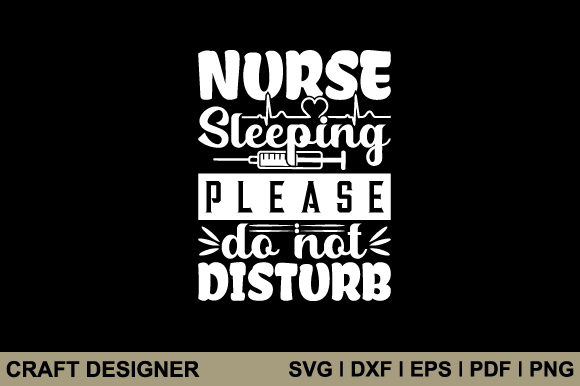
The illustration is uncomplicated and deeply relatable. A sleepy nurse, curled up with a pillow, with the words “Please Do Not Disturb” floating as a gentle declaration. The layout is front-and-center, with a well-balanced blend of text and image. The linework is clean enough that I could immediately see it translating into a satin stitch outline, while the slightly rounded shapes of the nurse’s hair and blanket begged for a soft fill stitch. There’s no over-the-top detail that would turn into a muddy mess under a needle, and the spacing between letters is generous – a critical detail when you’re digitizing for machine embroidery and you don’t want your text to blur into a blob. The mood is playful but not childish, making it a rare find for a gift that can actually make a tired healthcare worker smile.
From Screen to Stitch: A Real Project Scenario
A friend of mine just wrapped up her first year as a night-shift nurse, and I wanted to make her something that would feel personal without being cheesy. The Nurse Sleeping Please Do Not Disturb Svg became the centerpiece of a custom tote bag design I built for her. I used a heavy cotton canvas tote in a soft oatmeal color, and I digitized the SVG at a 5×7 hoop size so the design would sit proudly on the front panel. The idea was simple: a bag she could take to work, drop her scrubs in, and that would silently announce her mood after a 12-hour shift. The night before I stitched the final product, I ran three test sew-outs on similar scrap fabric, tweaking thread colors until the nurse’s tiny blush cheeks and the gentle curve of the pillow looked just right. The result was a personalized gift that felt like a hug in thread form, and it’s the kind of project that makes me grateful for versatile digital embroidery file packs like this one.
How the Design Performs on Different Fabrics and Products
Stitching this onto a sturdy canvas tote was a dream. The fabric texture held the stitches without any puckering, and I used a medium-weight cutaway stabilizer to keep everything firmly in place. When I tested the same design on a soft cotton sweatshirt, I had to switch to a heavier stabilizer and add a water-soluble topper to prevent the tiny face details from sinking into the fleece. For custom apparel like tees, a light tear-away stabilizer worked fine, but I’d avoid anything with extreme stretch unless you’re ready to fuse a second layer of backing. Dense fabrics like denim or a canvas apron handle the stitch density beautifully, but I did notice that on a dark navy fabric, the original outline colors needed a complete rethink. I ended up using a white underlay and a bright pastel thread palette to keep the illustration legible. If you’re aiming for an embroidered patch, this design is a natural fit – just keep the finished patch size above 3.5 inches wide so the lettering doesn’t turn into a scribble.
Small Details That Make a Big Difference in Embroidery
There are a few subtle things about the Nurse Sleeping Please Do Not Disturb Svg that I only appreciated after the third test sew-out. The closed eyes of the nurse are created with just a few delicate strokes, which means your running stitch has to be absolutely precise. If your machine tension is even slightly off, those eyes can look like a squiggly line instead of a peaceful expression. I also found that the pillow’s fill stitch, if left at default density, can get a little stiff. I reduced the density by about 10% and switched to a Tatami fill pattern, which gave the pillow a soft, fabric-like appearance that matched the tote’s texture. The text “Please Do Not Disturb” sat nicely in a single line, but when I tried to shrink the design for a 4×4 hoop, the lowercase letters started fighting for space. For smaller embroidery file projects, like a pocket-sized patch, you’d need to separate the text or increase the font size slightly, which can throw off the cozy layout.
Digitizing and Material Notes for the Best Finished Look
Since the download gives you a zip folder with SVG, DXF, EPS, PDF, and PNG, you’re not locked into one workflow. The SVG is the powerhouse for embroidery digitizing – it’s vector, so scaling is clean and the nodes are well-organized. I imported it directly into my digitizing software and spent about 30 minutes mapping out the stitch types. The nurse’s hair became a combination of satin stitch outlines and a light fill stitch for the larger sections, while the blanket benefited from a subtle running stitch detail that added texture without bulk. The PNG came in handy for creating a printable mockup to show my friend what the final finished product would look like before I even threaded the needle. I always keep a few hard rules in my back pocket when working with a new design asset like this:
- Test on scrap fabric first – never skip this, especially with a design that has tiny facial features.
- Check thread color contrast on both light and dark backgrounds before you commit.
- Use a proper stabilizer; cutaway for stretchy fabrics, tear-away for wovens.
- Watch the hoop size – I wouldn’t go below 5×7 for this without redesigning the layout.
- Inspect the small details in a black-and-white mockup to see if the design still reads clearly.
Where It Belongs in Your Craft Business
If you’re an Etsy seller or a small shop owner, the Nurse Sleeping Please Do Not Disturb Svg is one of those rare design assets that speaks directly to a tight-knit community. Nurses and healthcare workers have a wicked sense of humor, and this graphic taps into the universal exhaustion of a long shift. I’ve seen similar designs sell well on tote bags, pillow covers, and tea towels, especially around Nurses Week or as part of a self-care gift set. A quilted apron with this design would be a hit in a hospital break room, and a sweatshirt with a larger, offset version could easily become a bestseller in a commercial embroidery lineup. The handmade product value goes up because the design feels personal, not like a generic clip-art piece. When I listed the tote bag I made, customers immediately commented on how “cute and relatable” it was, which tells me the visual appeal and customer trust are firmly in place.
Final Thoughts: A Reliable Choice for Humorous Gifts
After multiple test runs and a finished custom apparel piece that has already survived four washes, I can confidently say the Nurse Sleeping Please Do Not Disturb Svg is a practical, well-made graphic for anyone who wants to turn a digital file into a stitched conversation starter. It’s not a design that tries to do too much, and that’s exactly why it works. The craft business potential is clear, the giftability is high, and as long as you respect the little details – stabilizer choice, thread palette, and stitch density – the embroidery project will come out looking just as charming as the digital preview. Before you sell the finished product or use the file for commercial embroidery, double-check the license terms that come with the download. The listing says “This file is specially made,” but it’s always smart to confirm whether selling physical items made from the graphic is allowed. For personal gifts and small-batch handmade products, I’d use it again in a heartbeat. Extract that zip folder, test it on a scrap, and then stitch something that makes somebody smile.