Nurse Life Coffee Scrubs and Rubber Svg: A Designer's Honest Review
When I first opened the download for the Nurse Life Coffee Scrubs and Rubber Svg, I immediately pictured a worn-in crewneck sweatshirt, soft and slightly oversized, with this design stitched across the chest in a warm espresso thread. That is the kind of instant visual connection I look for in a design file before I even load it into my software. The theme is clear, the personality is strong, and the mood lands somewhere between cozy, sarcastic, and deeply relatable for anyone in the nursing profession who runs on caffeine and sheer determination.
I have been evaluating embroidery designs for years, and I always ask the same question first: does this design tell a story that someone would actually want to wear, gift, or sell? With Nurse Life Coffee Scrubs and Rubber Svg, the answer came quickly. This is not a stiff, overly polished graphic that feels disconnected from real life. It has the kind of casual, conversational energy that works beautifully on handmade products, boutique apparel, and personalized gifts where the buyer wants to feel seen and understood.
First Impressions of the Design Personality
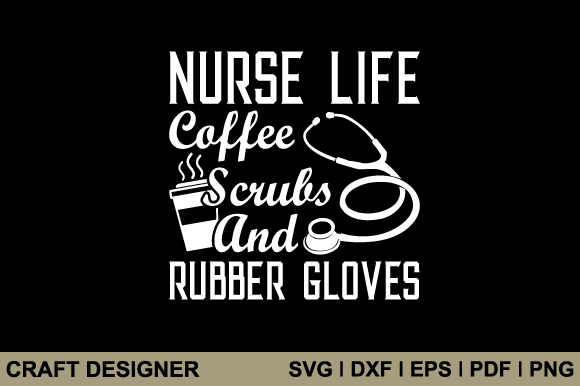
The phrasing itself carries a lot of weight. "Nurse Life" paired with "Coffee Scrubs and Rubber" hits that sweet spot between professional identity and everyday humor. The design feels like an inside joke shared among healthcare workers, which is exactly the kind of emotional hook that makes a product sell well at craft fairs, on Etsy, or through small shop social media channels. From a designer's perspective, the text-heavy nature of the file means I need to pay close attention to lettering clarity, spacing, and how those elements will translate into thread on fabric.
I extracted the zip folder and reviewed the included formats: SVG, DXF, EPS, PDF, and PNG. The variety is practical for multi-platform use. If you are an embroidery digitizer, you will likely start with the SVG or EPS to bring the artwork into your digitizing software. If you are creating printable mockups, product previews, or sublimation prints alongside your embroidery work, the PNG gives you a ready-to-use raster option. The file package is straightforward and does not overcomplicate things, which I appreciate when I am moving between multiple design assets in a production workflow.
Real Project Scenario: A Custom Tote Bag for a Nurse
Let me walk you through a real use case I had in mind while evaluating this design. A client reached out to me last month looking for a personalized tote bag for her daughter who had just graduated from nursing school. She wanted something that felt personal, a little humorous, and practical enough to carry to long shifts. The Nurse Life Coffee Scrubs and Rubber Svg immediately came to mind as a strong candidate for the front panel of a medium-weight canvas tote.
In my planning, I visualized the design centered on the bag with a muted coffee-brown thread on natural cream canvas. The fabric texture on a tote like that is moderately coarse, so I knew I would need a solid cutaway stabilizer to prevent the lettering from sinking into the weave. The design's layout, which I would describe as balanced and horizontally oriented, fits the rectangular proportions of a standard tote bag panel surprisingly well. I did not have to stretch or distort the artwork to make it fill the space naturally, which is a genuine practical advantage when you are preparing a finished product for a client who expects it to look professional.
Thread Color Choices and Contrast Considerations
One of the first things I test mentally with any new embroidery design is how it will behave across different thread color palettes. With Nurse Life Coffee Scrubs and Rubber Svg, the theme naturally lends itself to warm tones: coffee browns, cream, soft caramel, muted charcoal, and even deep burgundy for a richer look. I would avoid overly bright or neon threads unless the fabric itself is a dark solid, because the design's strength lies in its cozy, grounded feel rather than high-contrast pop.
On dark fabric, such as a navy or black sweatshirt, I would recommend testing the design with a lighter thread like cream, soft gold, or a warm tan to maintain legibility. Small text details can disappear quickly on dark backgrounds if the thread color is too close to the fabric value. I always run a quick grayscale mockup before committing to thread colors, and I would advise the same here. The design holds up well in black and white previews, which tells me the shapes and spacing are solid enough to survive less-than-perfect contrast scenarios.
Stitch Type and Density Considerations
As an embroidery designer, I think about stitch types the moment I see a design. Text-heavy designs like Nurse Life Coffee Scrubs and Rubber Svg typically benefit from a combination of satin stitch for the main lettering and fill stitch for any larger decorative elements. If the lettering is on the smaller side, running stitch might be the safer choice to avoid thread buildup and puckering. I do not have the exact stitch count in front of me, so I would strongly recommend digitizing a test version on scrap fabric that matches your final project material as closely as possible.
Stitch density is another factor I pay close attention to, especially with designs that feature multiple lines of text. If the lettering is too dense, you risk stiff, uncomfortable patches on wearable items. If it is too sparse, the fabric shows through and the design looks unfinished. Finding that middle ground is easier when you start with clean vector artwork, and the SVG in this package provides a good foundation for precise digitizing.
Hoop Size and Placement Strategy
Before you commit this design to a finished product, confirm the maximum hoop size your machine can handle and compare it to the dimensions of the design after digitizing. I always measure twice. For a standard sweatshirt chest placement, a design width of around seven to nine inches often works well, but you need to verify that the lettering remains readable at the size you choose. If the text elements are intricate, scaling down too aggressively could cause thread breaks or blurred details during stitching.
On curved surfaces like caps or hats, text-heavy designs can be tricky. The curvature of the cap can distort the baseline of the lettering, making it look uneven even if the digitizing is technically correct. I would use Nurse Life Coffee Scrubs and Rubber Svg on flatter surfaces like tote bags, pillow covers, sweatshirt fronts, apron bibs, or blanket panels before attempting it on a structured cap. If a client insists on a hat, I would test a scaled-down version on a similar curved surface first and adjust the digitizing accordingly.
Fabric Compatibility and Stabilizer Recommendations
Different fabrics demand different approaches, and I have learned this the hard way over years of trial and error. For Nurse Life Coffee Scrubs and Rubber Svg, I would be most confident using it on medium-weight woven fabrics like cotton canvas, linen blends, and twill. These fabrics hold stitch definition well and do not stretch during hooping, which is critical for keeping text aligned and crisp.
On stretchy fabrics like jersey knit or performance blends, I would add a layer of fusible mesh stabilizer behind the fabric before hooping, and I would use a ballpoint needle to avoid snagging the fibers. Stretchy fabric can pull text out of shape during wear, so I always advise clients who want this design on a fitted t-shirt to expect a slightly softer, less rigid final look compared to a woven tote or structured apron.
For thin or delicate fabrics, such as lightweight cotton used in baby items, I would be cautious. The stitch density required to make the lettering legible could overwhelm a thin fabric and cause puckering. If the project is a baby blanket or nursery decor piece, I would size the design generously and use a heavyweight stabilizer to compensate for the fabric's lack of structure. Testing on a similar scrap is non-negotiable here.
Where This Design Shines in a Craft Business
From a small business perspective, Nurse Life Coffee Scrubs and Rubber Svg has clear commercial potential. The nursing community is large, tight-knit, and deeply appreciative of products that reflect their daily reality. I can see this design moving well on embroidered sweatshirts, canvas tote bags, kitchen towels, zip pouches, and even framed hoop art for nurse stations or break rooms. The humor is gentle enough to feel inclusive, and the coffee angle broadens the appeal to anyone who works long shifts, not just nurses exclusively.
For Etsy sellers and craft fair vendors, products featuring this design could be positioned as graduation gifts, holiday presents, or self-care treats for healthcare workers. The design's relatability is its strongest selling point. When a customer sees "Nurse Life Coffee Scrubs and Rubber" on a handmade item, they do not need a long explanation. They get it immediately, and that instant recognition often translates to faster purchasing decisions.
Personalized Gifts and Client Projects
I have also considered how this design could be paired with personalization. Adding a name, a graduation year, or a short custom message beneath or above the main design could elevate a standard product into a meaningful keepsake. If you offer personalized embroidery in your shop, keep the additional text simple and let the main design carry the visual weight. Too much added text can crowd the layout and dilute the impact of the original artwork.
Checking Licensing and Commercial Use
Before you list any finished product using Nurse Life Coffee Scrubs and Rubber Svg, confirm the licensing terms that came with your purchase. The product description notes that the file is specially made, but I always recommend reviewing the seller's specific terms regarding commercial use, print-on-demand, and digital resale. Some designs in the Crafts and Graphics space are intended for personal use only, while others allow finished physical products to be sold. Do not assume. Check the license, and if the terms are unclear, reach out to the seller directly. This protects your business and respects the original designer's work.
Practical Tips for a Smooth Embroidery Workflow
- Test on scrap fabric first. Always. Your final project fabric should be as close to the test fabric as possible in weight, weave, and stretch.
- Check thread color contrast before stitching. Hold the thread spool against the fabric in natural light and make sure the lettering will stand out clearly.
- Review stitch density after digitizing. Run a sample stitch-out and feel the back of the fabric. If it is stiff or bulky, adjust the density settings.
- Confirm hoop size compatibility with your machine. Do not assume the design will fit; measure the digitized file dimensions.
- Inspect small details under magnification if possible. Thin lines, tiny serifs, or closely spaced letters can blur during stitching if the digitizing is not precise.
- Test in black and white to evaluate shape clarity independent of color. A strong design should still read well in grayscale.
- Use the right stabilizer for your fabric type. Cutaway for knits, tear-away for wovens, and fusible mesh for delicate or stretchy materials.
- Keep the design off high-friction areas if the product will be washed frequently. Consider placement on the upper chest, center panel, or front pocket area rather than lower edges that rub against counters or tables.
Final Thoughts from the Worktable
After spending time with Nurse Life Coffee Scrubs and Rubber Svg, I can say with confidence that this is a design with genuine practical value for embroidery designers, small business owners, and crafters who want to create products that feel personal and connected to real life. The artwork is clean enough to digitize smoothly, the theme is specific without being niche, and the emotional resonance is strong enough to drive customer interest in a crowded handmade market.
I would not hesitate to use this design on a custom sweatshirt for a nurse friend, a set of kitchen towels for a healthcare-themed gift basket, or a canvas tote for a boutique product line. The key is thoughtful preparation: test your stitch-out, choose colors that respect the design's mood, and place it on products where the text can breathe and be read clearly. When those elements come together, the finished product feels intentional, professional, and deeply satisfying to create.
For anyone building a craft business around relatable, conversation-starting embroidery, Nurse Life Coffee Scrubs and Rubber Svg is a design worth adding to your creative toolkit. Treat it with the same care you would give any client project, and the results will speak for themselves.